Gallery 103, Bucknell University, 2024
Maggie Cardelús, the 2024 Ekard Artist in Residence at Bucknell University, is a dual national of the US and Spain, currently based in Paris, France. Her interdisciplinary work weaves together visual culture theory, materiality, and evolving historical perspectives through hybrid approaches to traditional media. In her ongoing project, Driftpoints, she critically reinterprets the iconic 1867 painting The Gleaners by Jean-François Millet, engaging with both personal experience and broader cultural structures that shape how images circulate, persist, and accrue meaning over time.
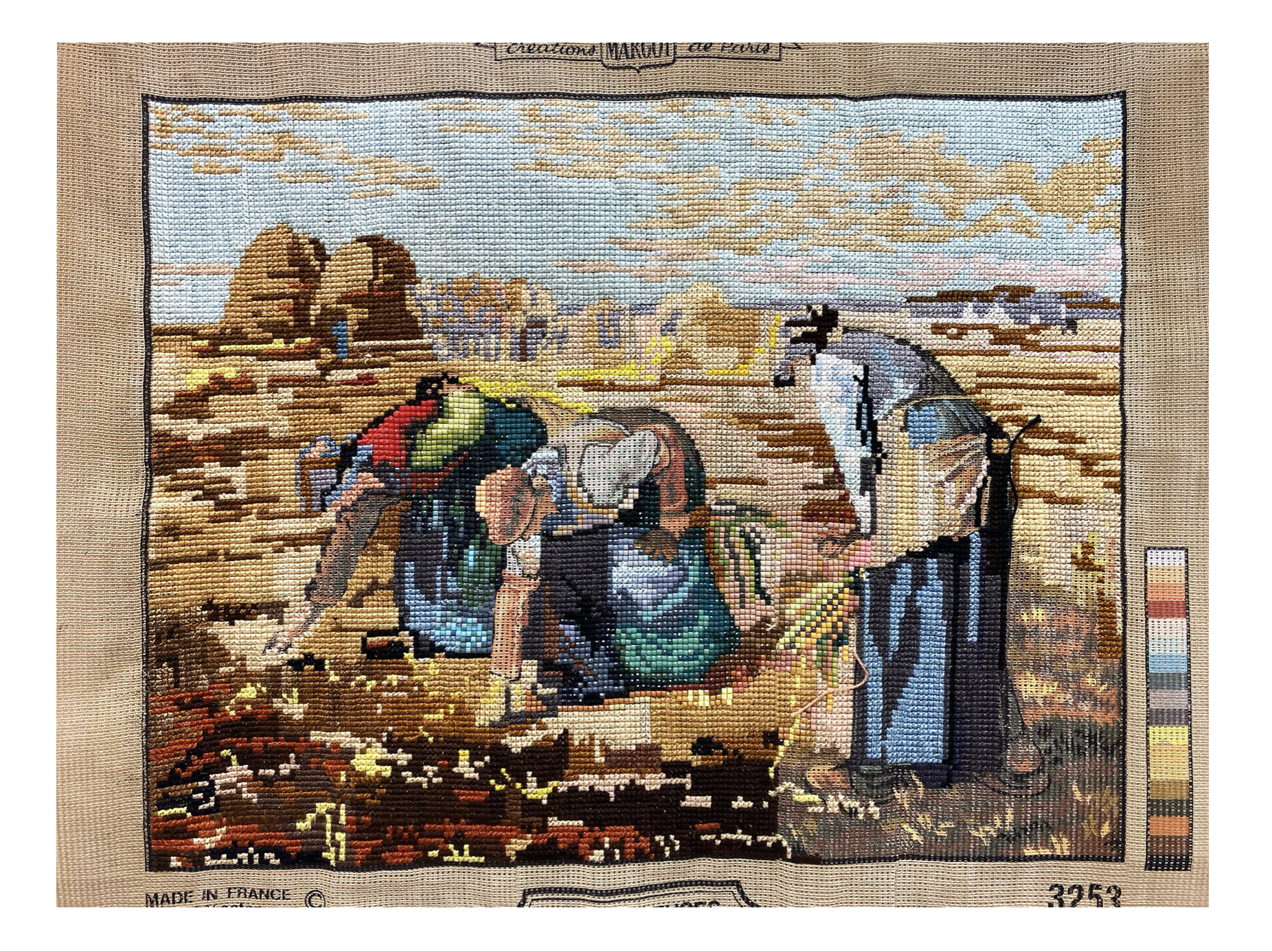
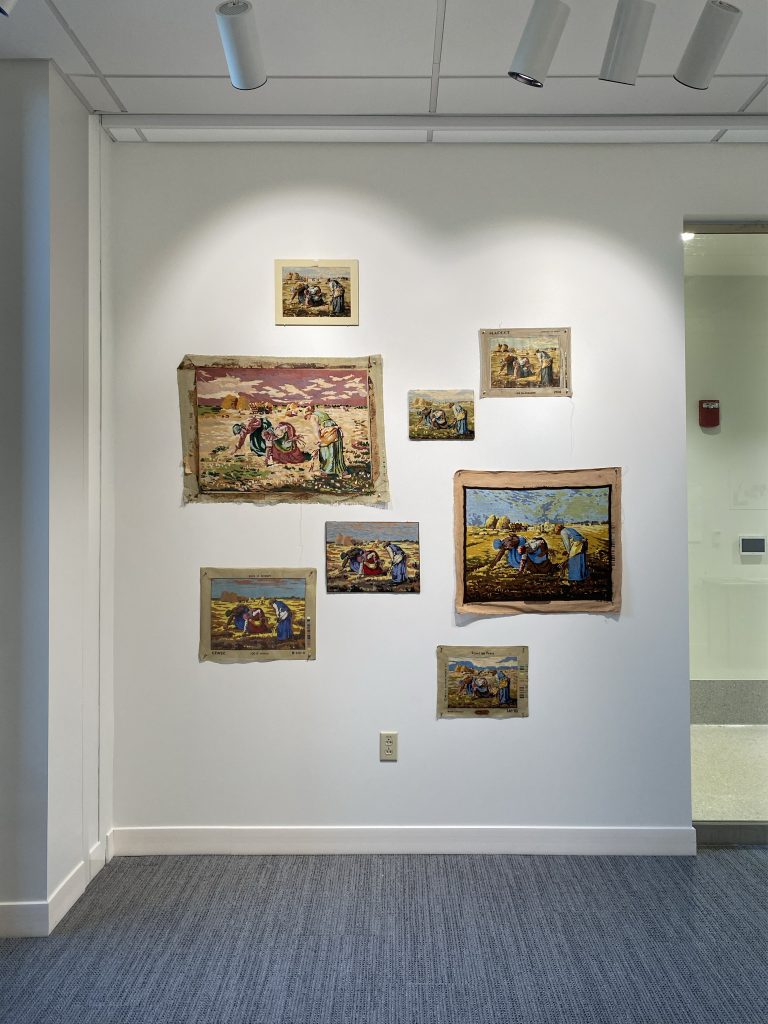
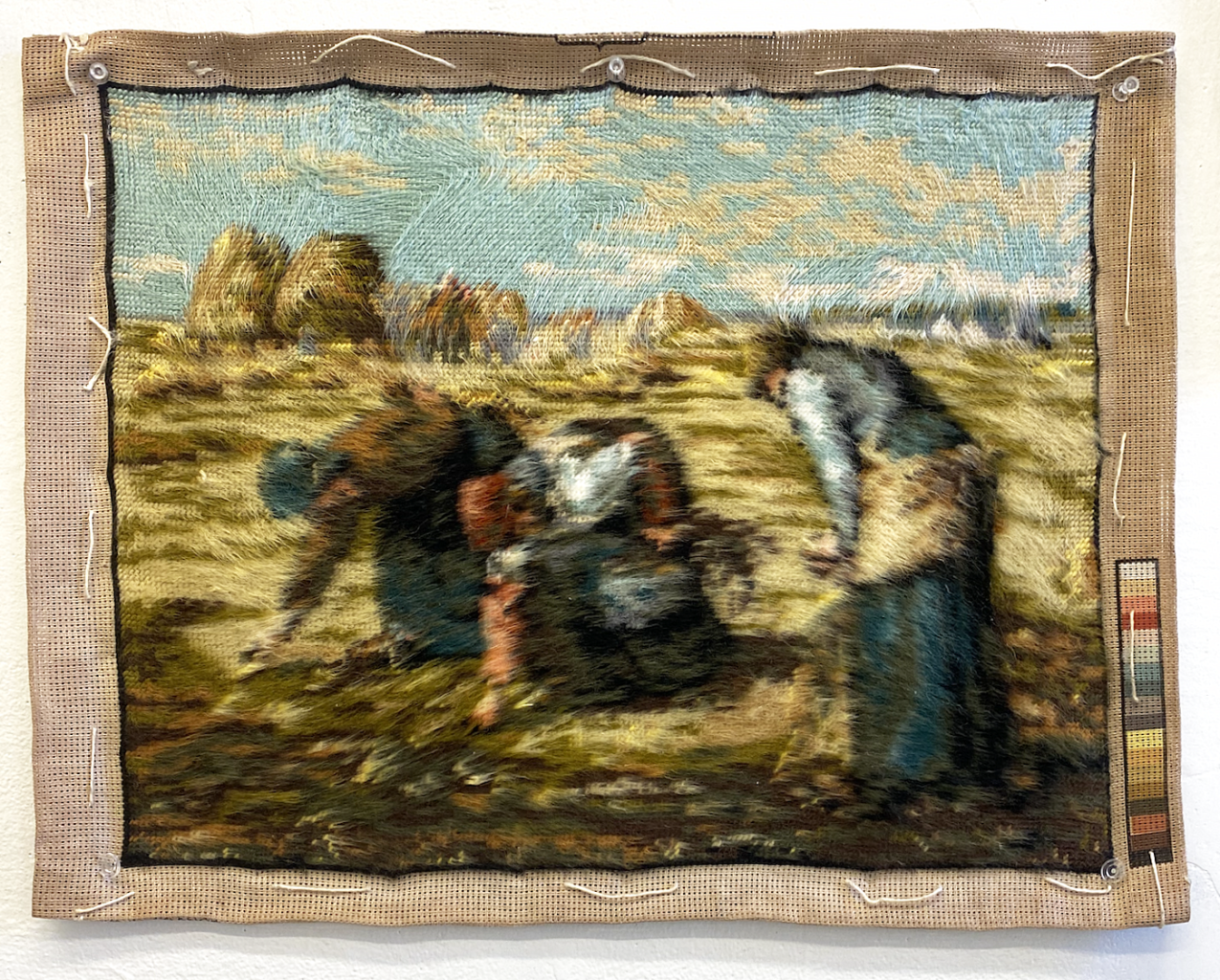
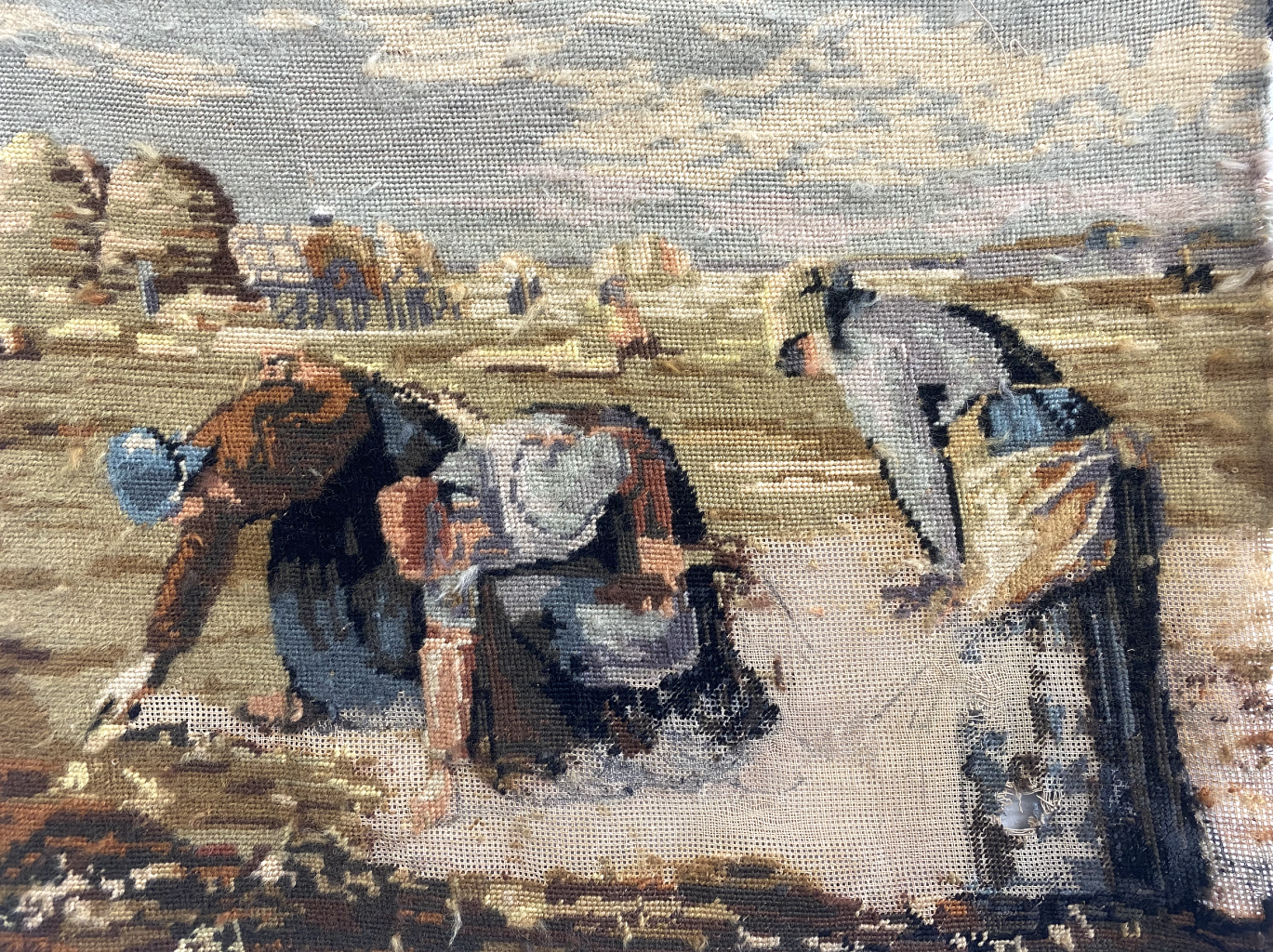
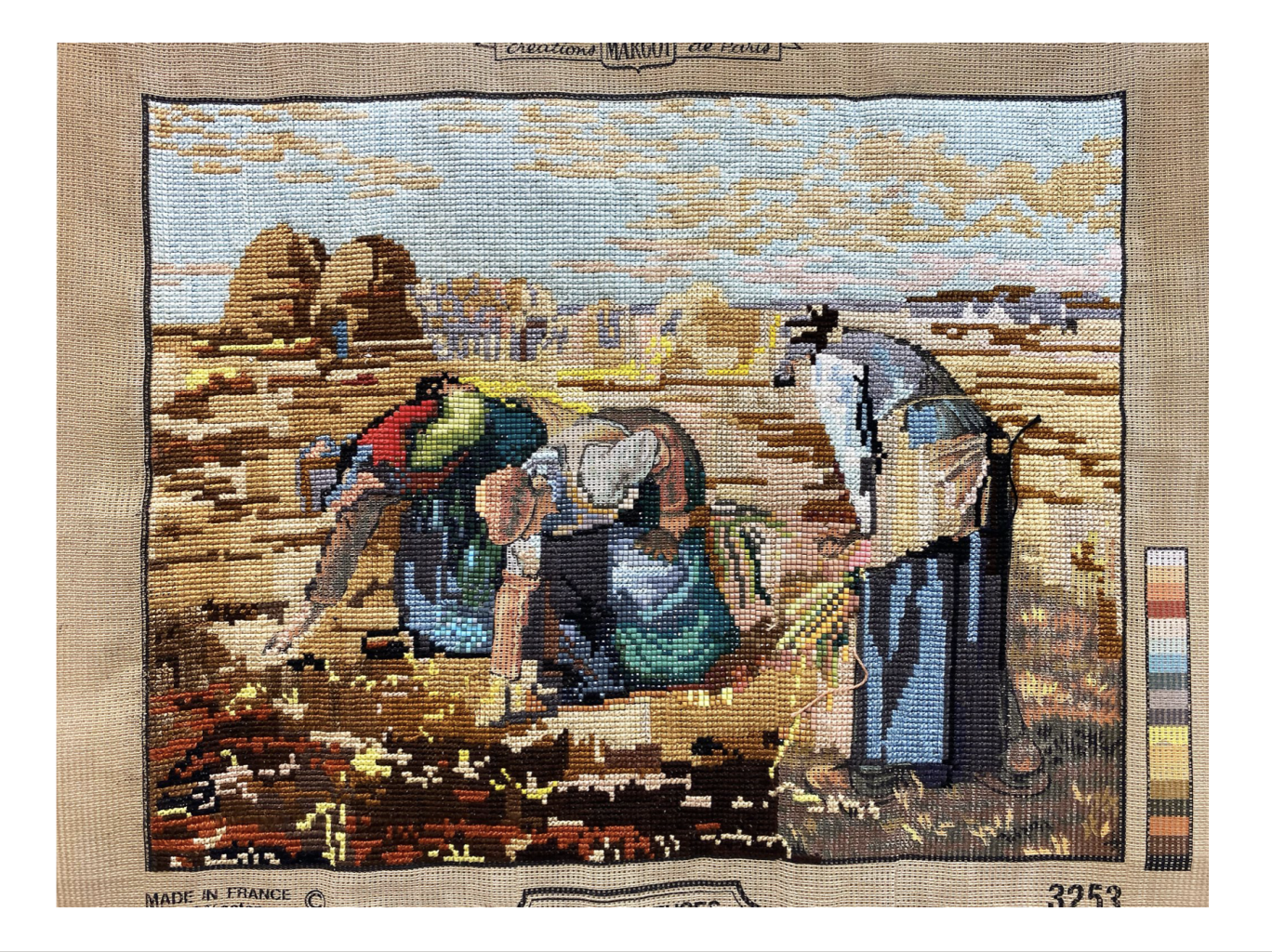
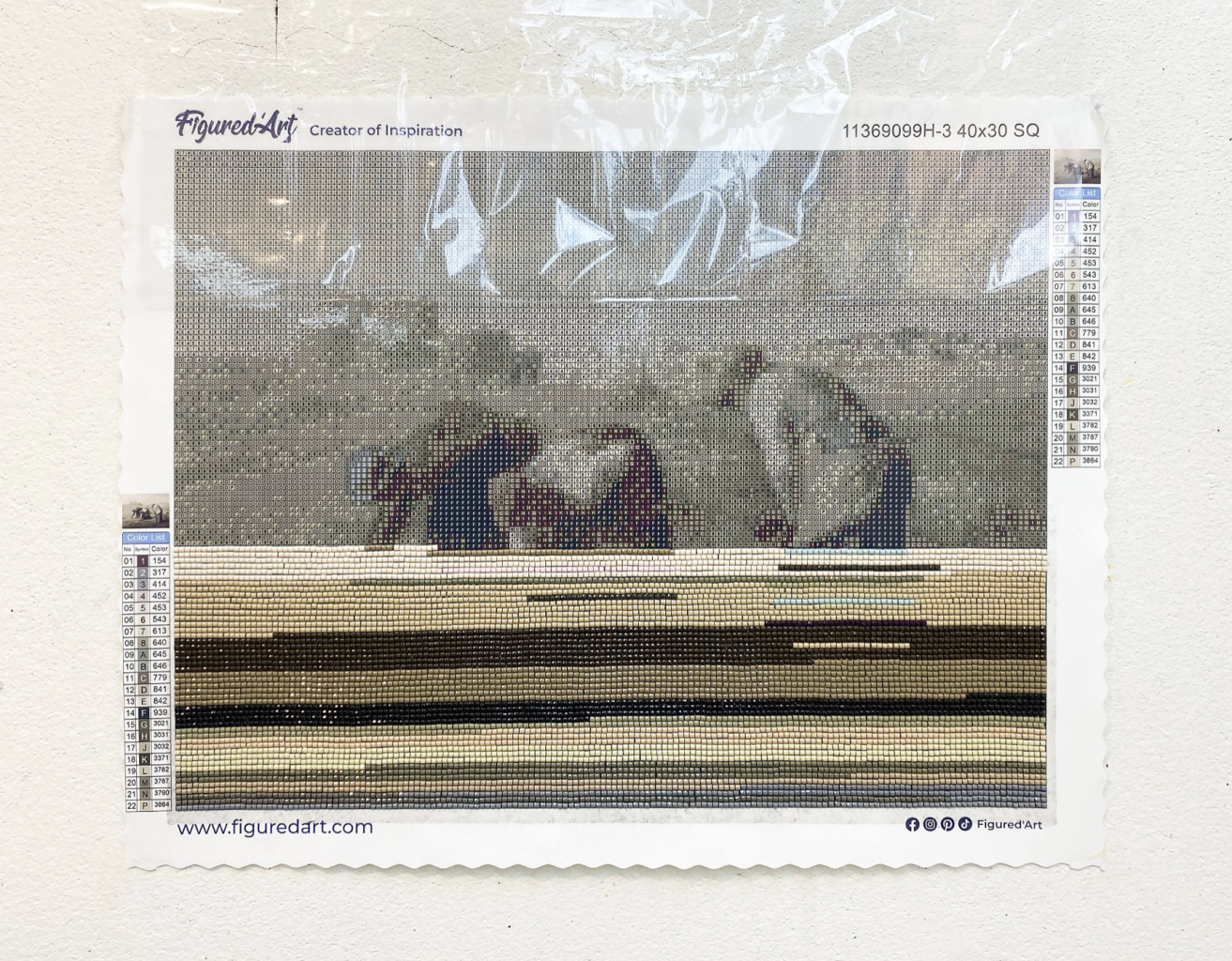
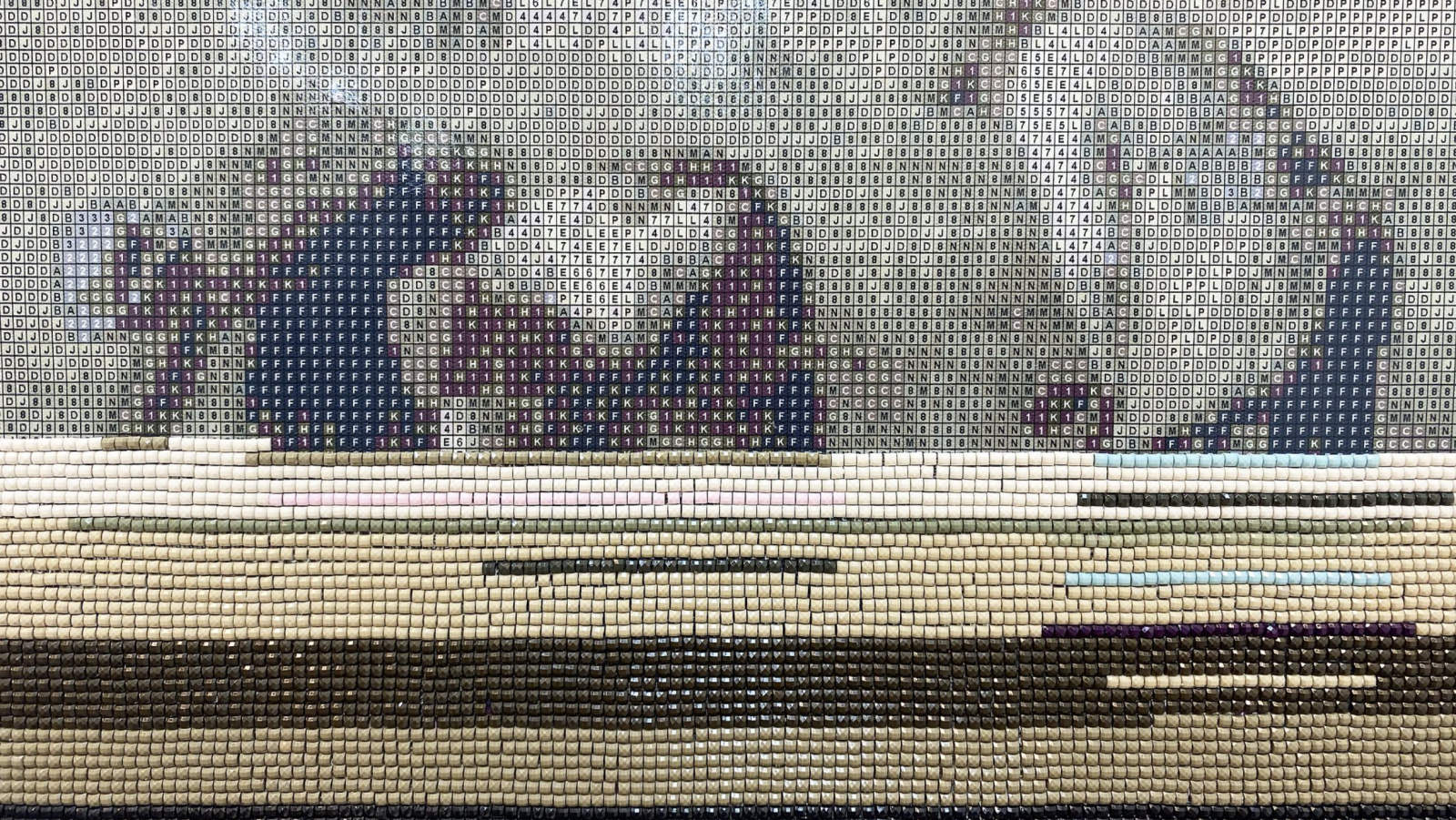
This widely reproduced image has inspired a diverse array of needlepoint kits for over a century, each varying in scale, color palette, stitch type, mesh count, and interpretation. For Cardelús, these kits function not simply as translations of an image, but as operational systems – pixelated, rule-based structures that continue to circulate and organize labor long after the original painting’s authority has thinned. She investigates this transformed image to uncover the cultural dynamics embedded in needlepoint, a medium often overlooked yet dense with socio-historical significance.
Needlepoints are polysemous artifacts that embody a semi-automated, grid-based mode of making; a meditative, repetitive practice; and the often anonymous labor of women. They occupy an uneasy space between image and infrastructure, where repetition sustains circulation even as meaning becomes diffuse. In this sense, they raise questions not only about the status of the image, but about what remains operative when belief in originality, authorship, or resolution erodes.
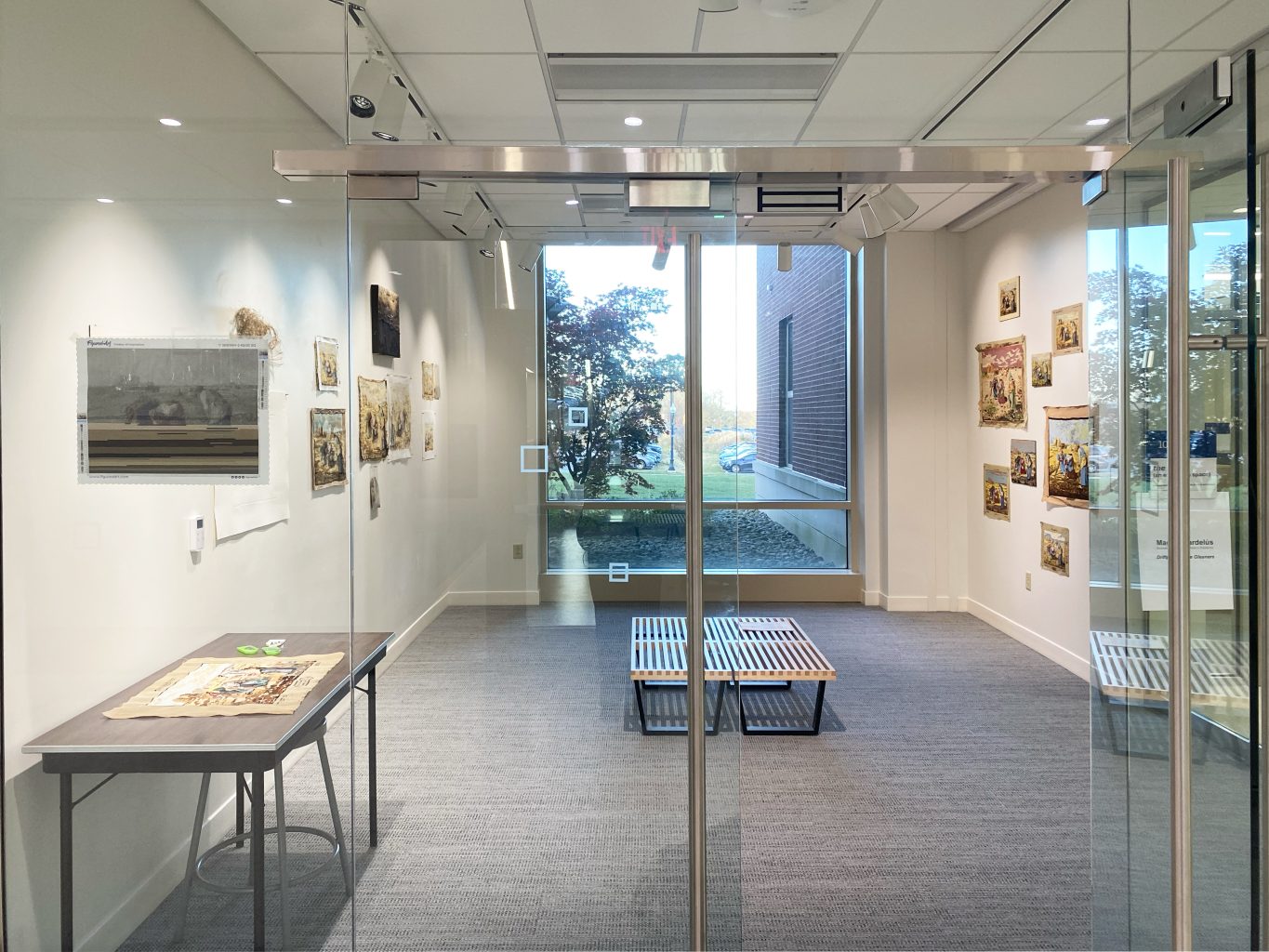
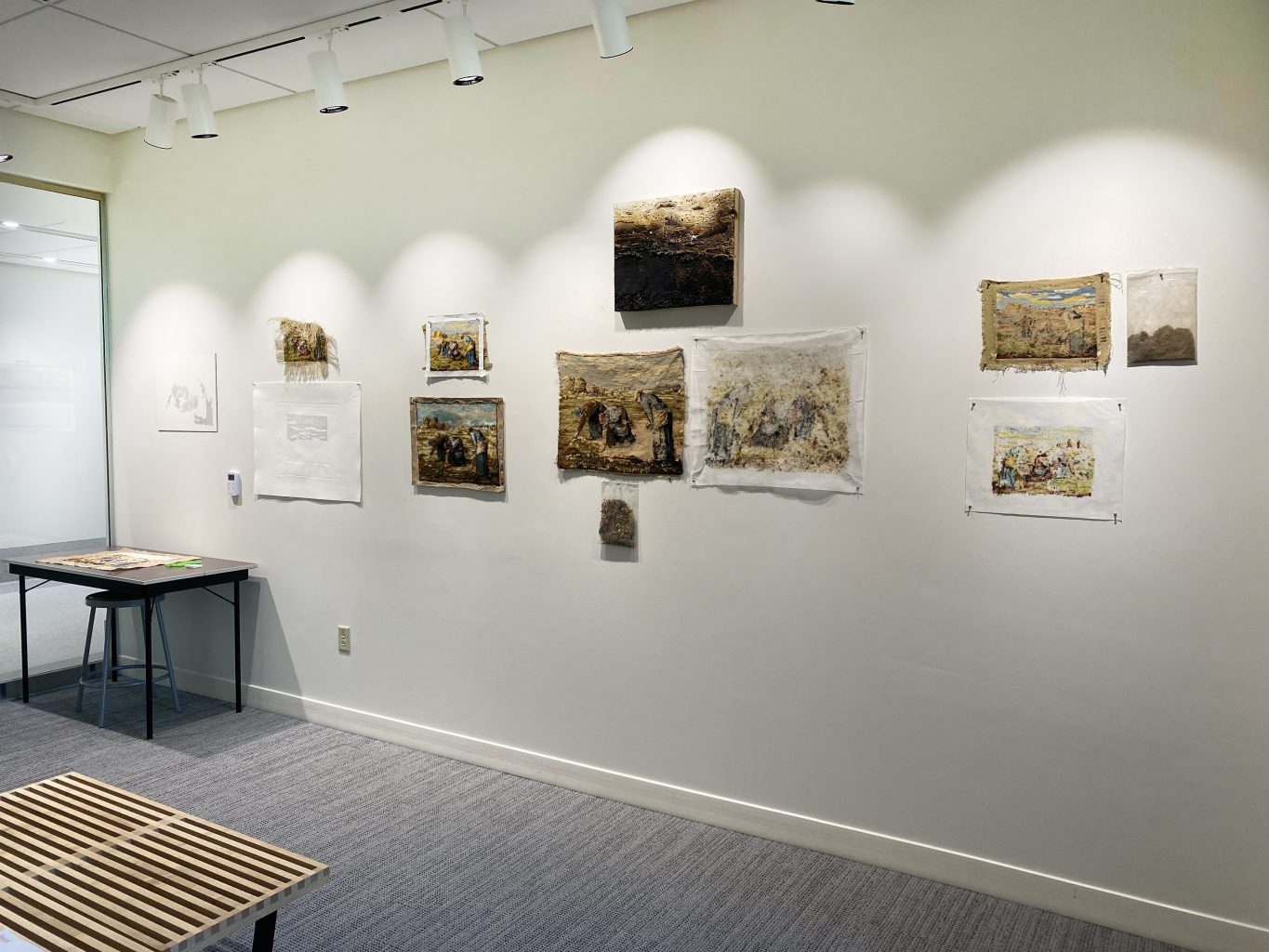
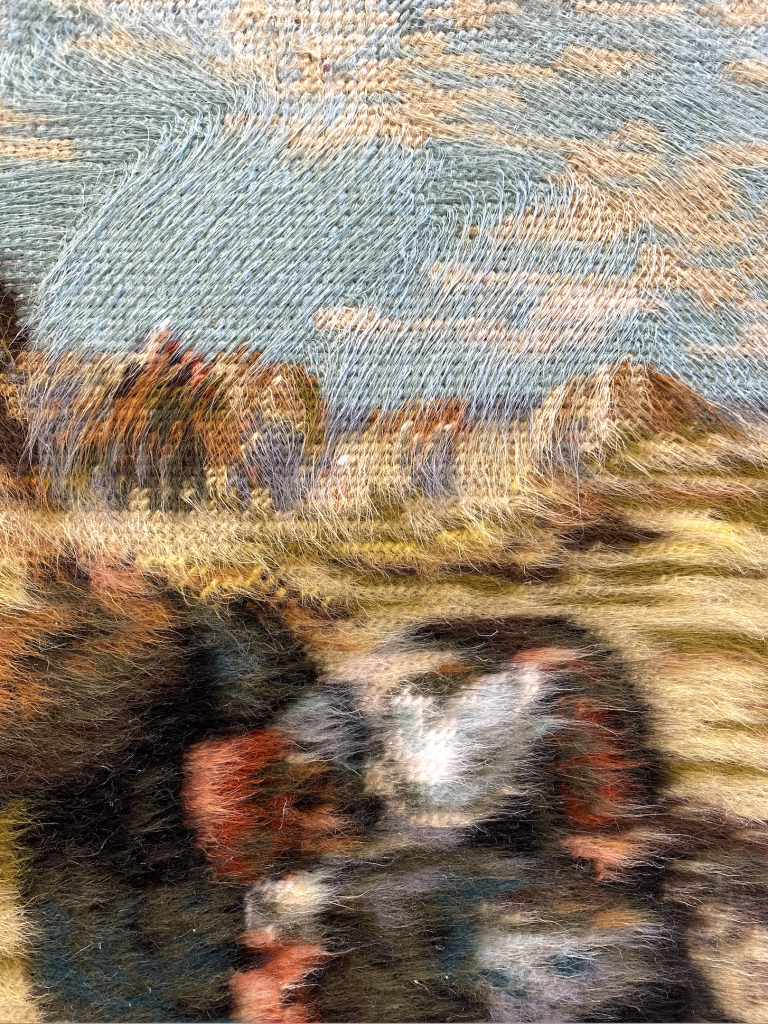
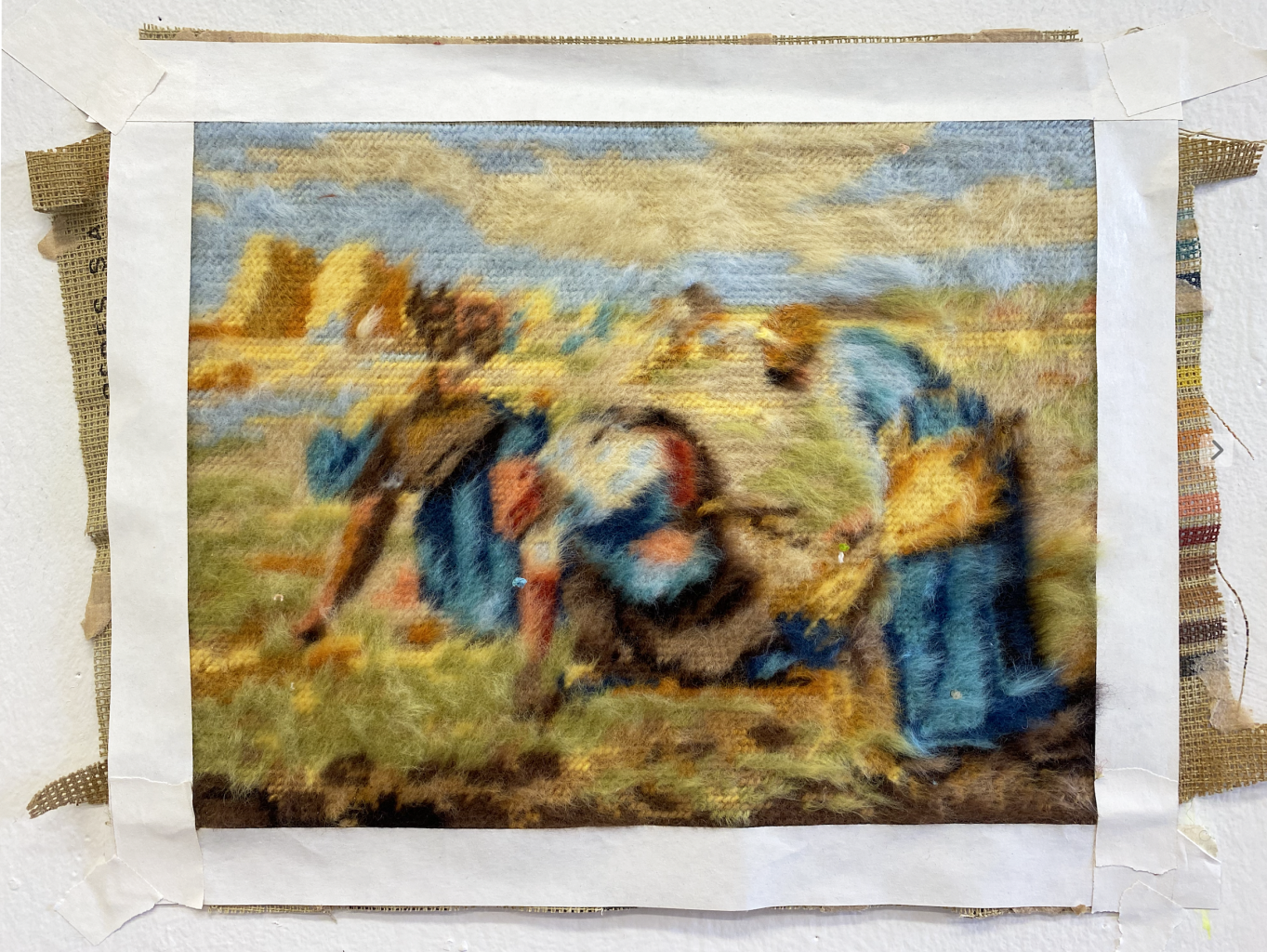
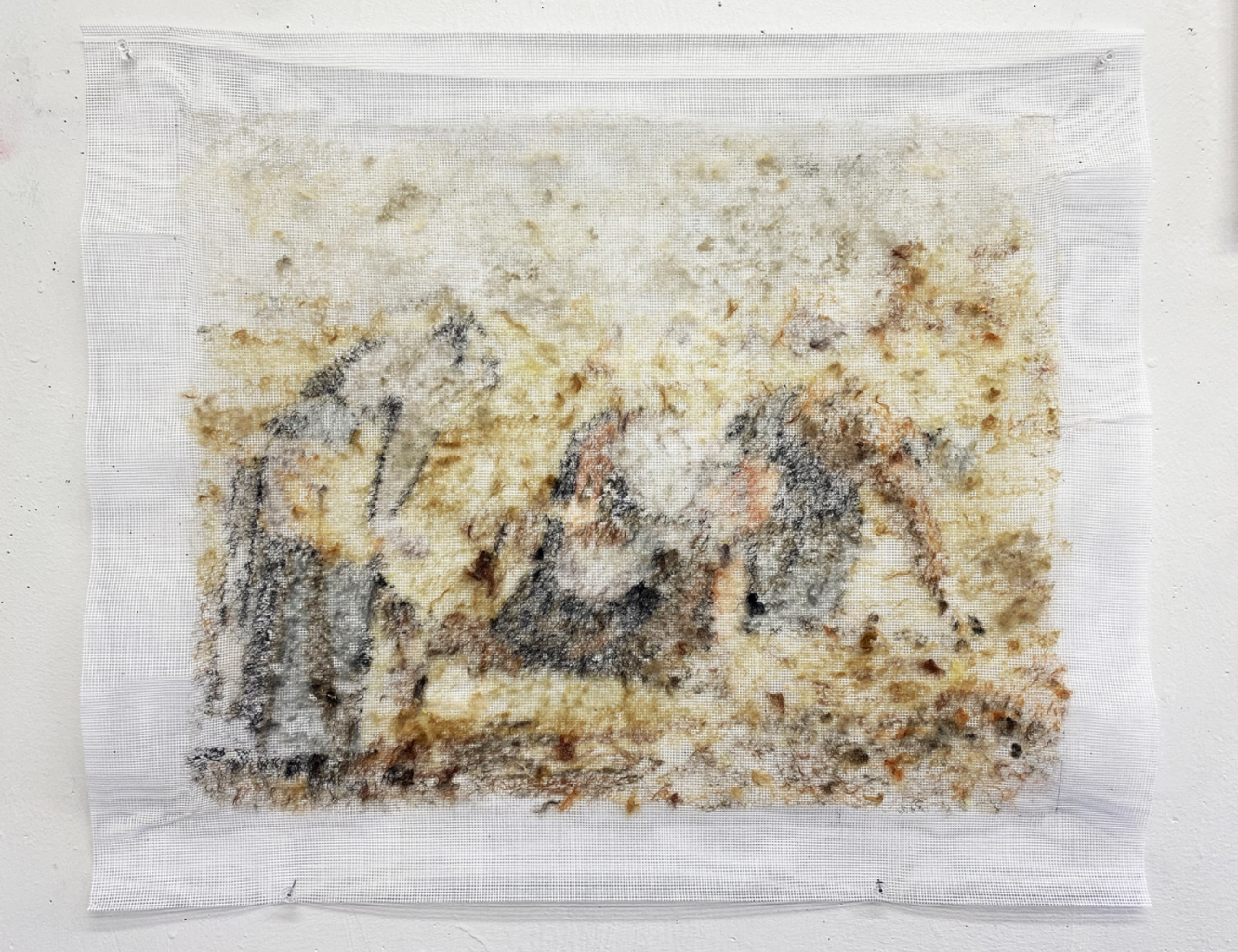
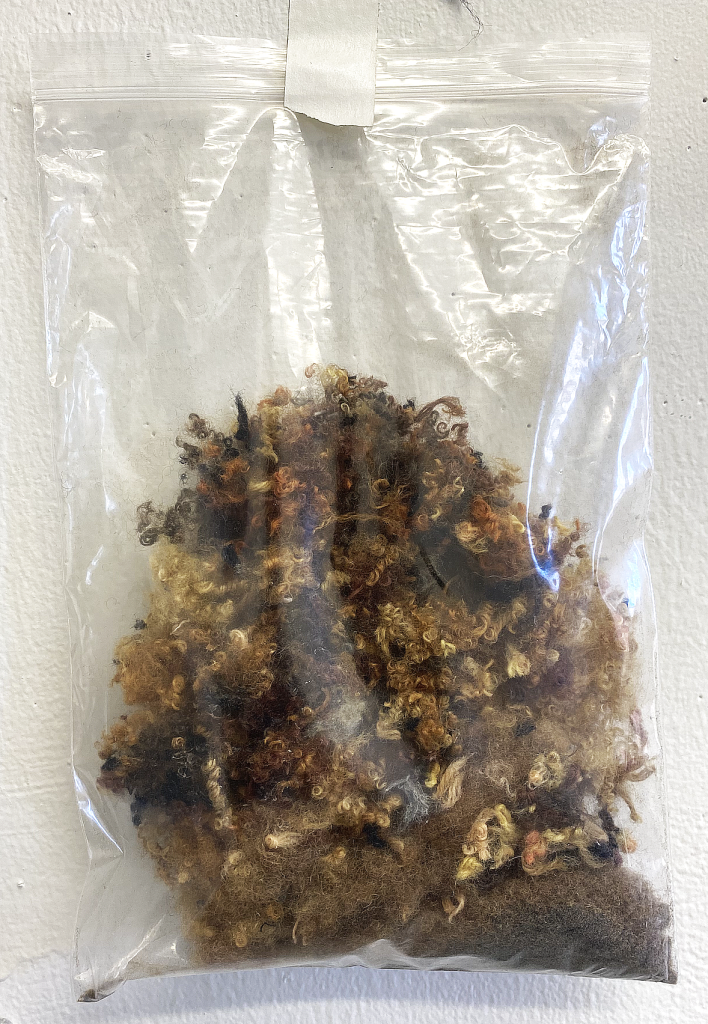
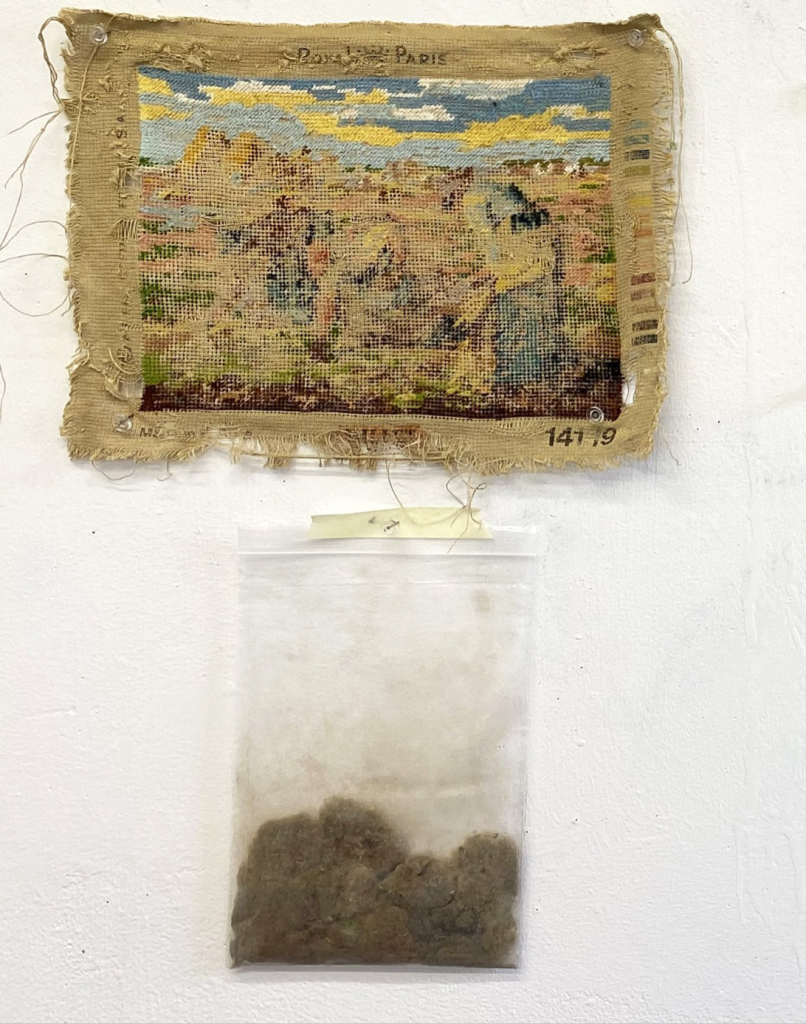
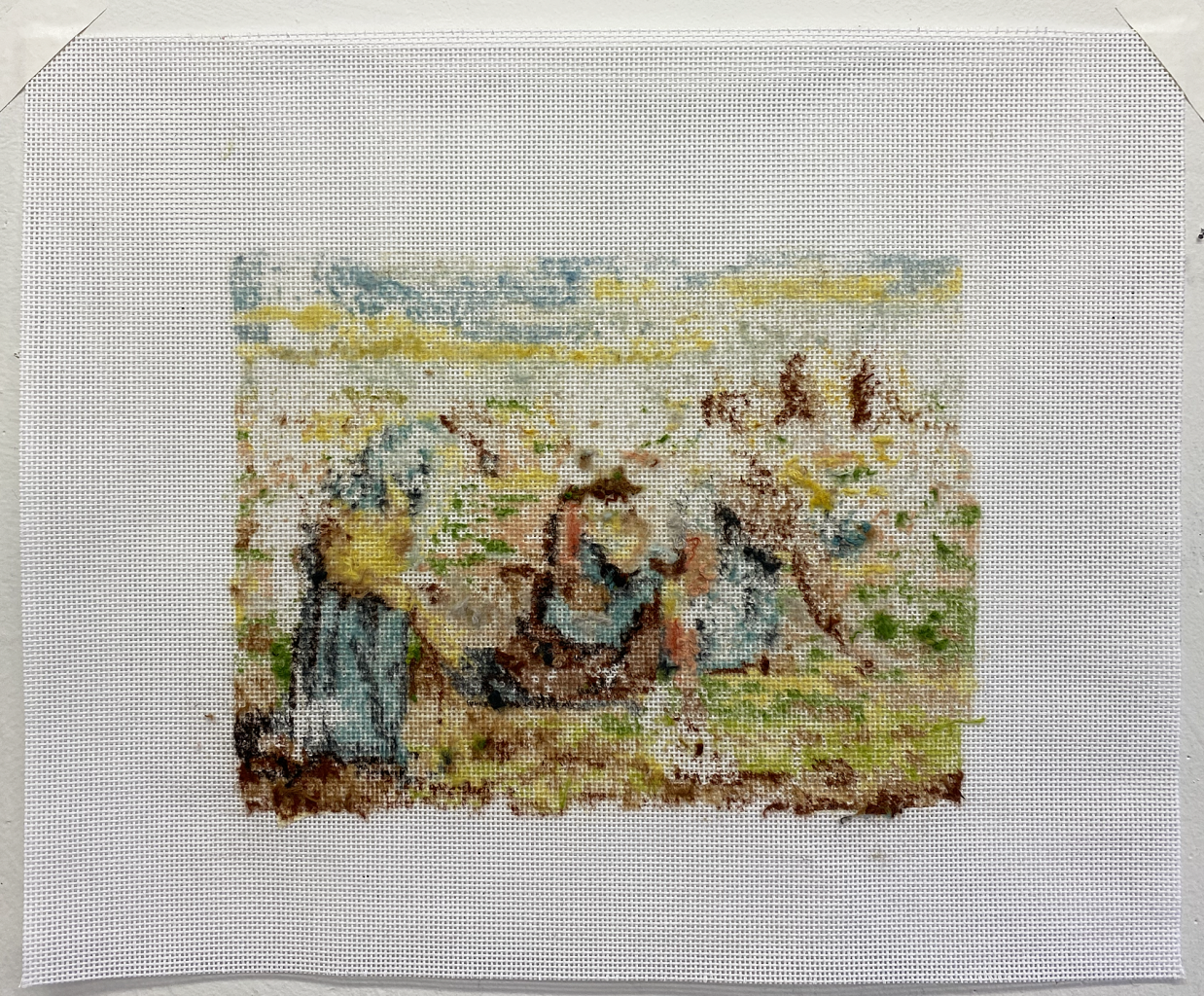
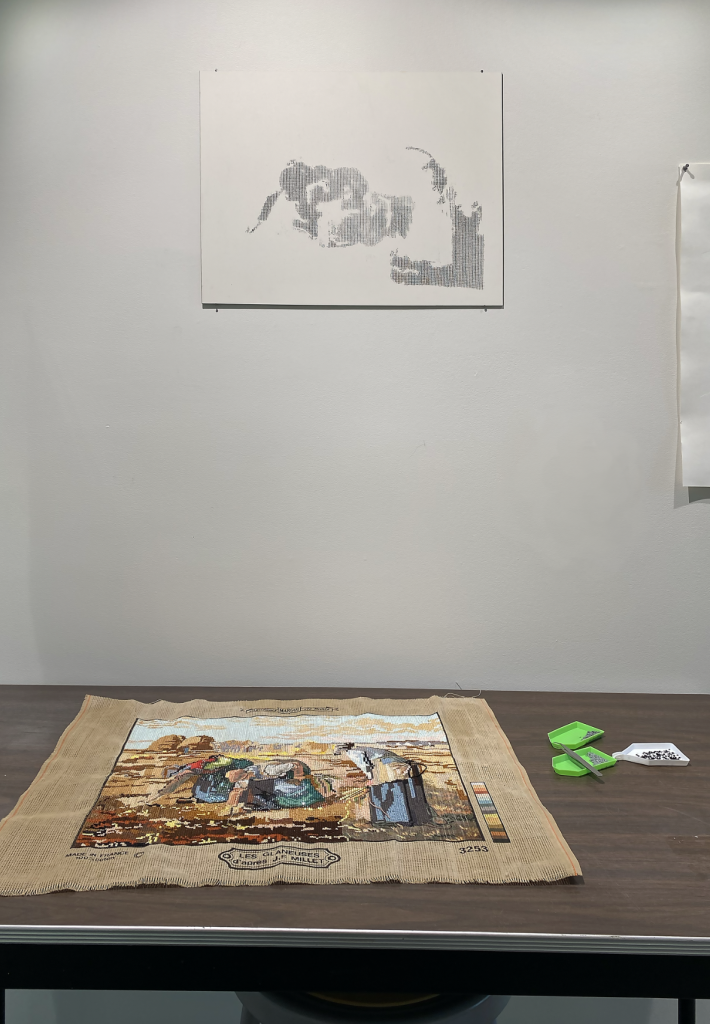
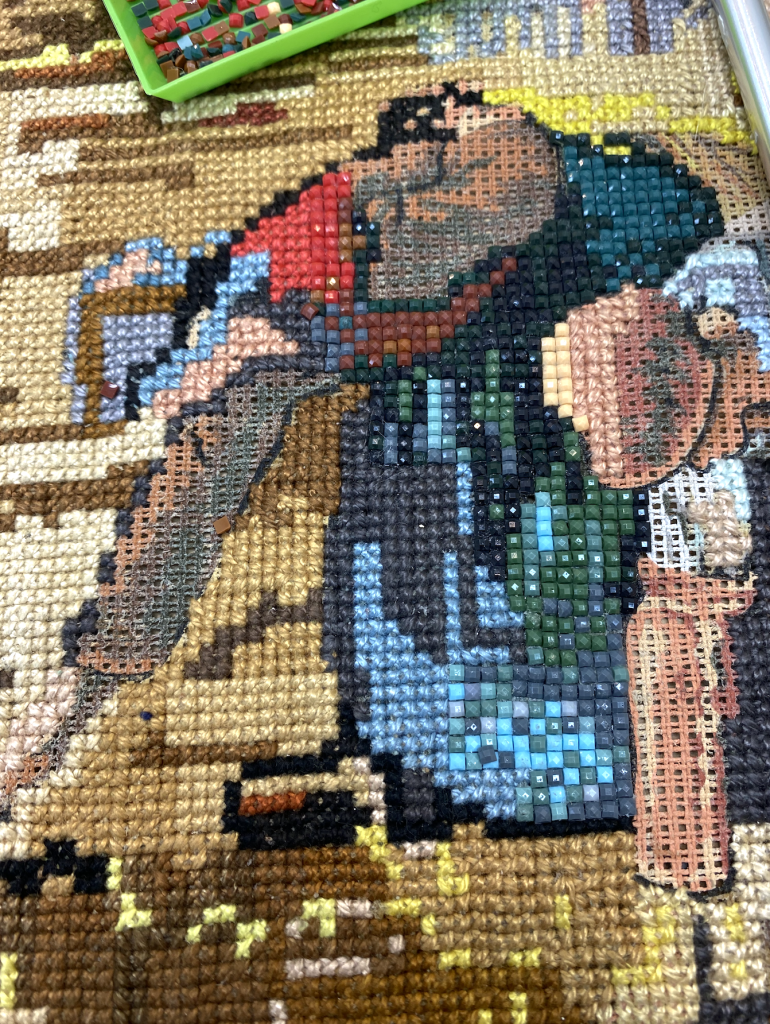
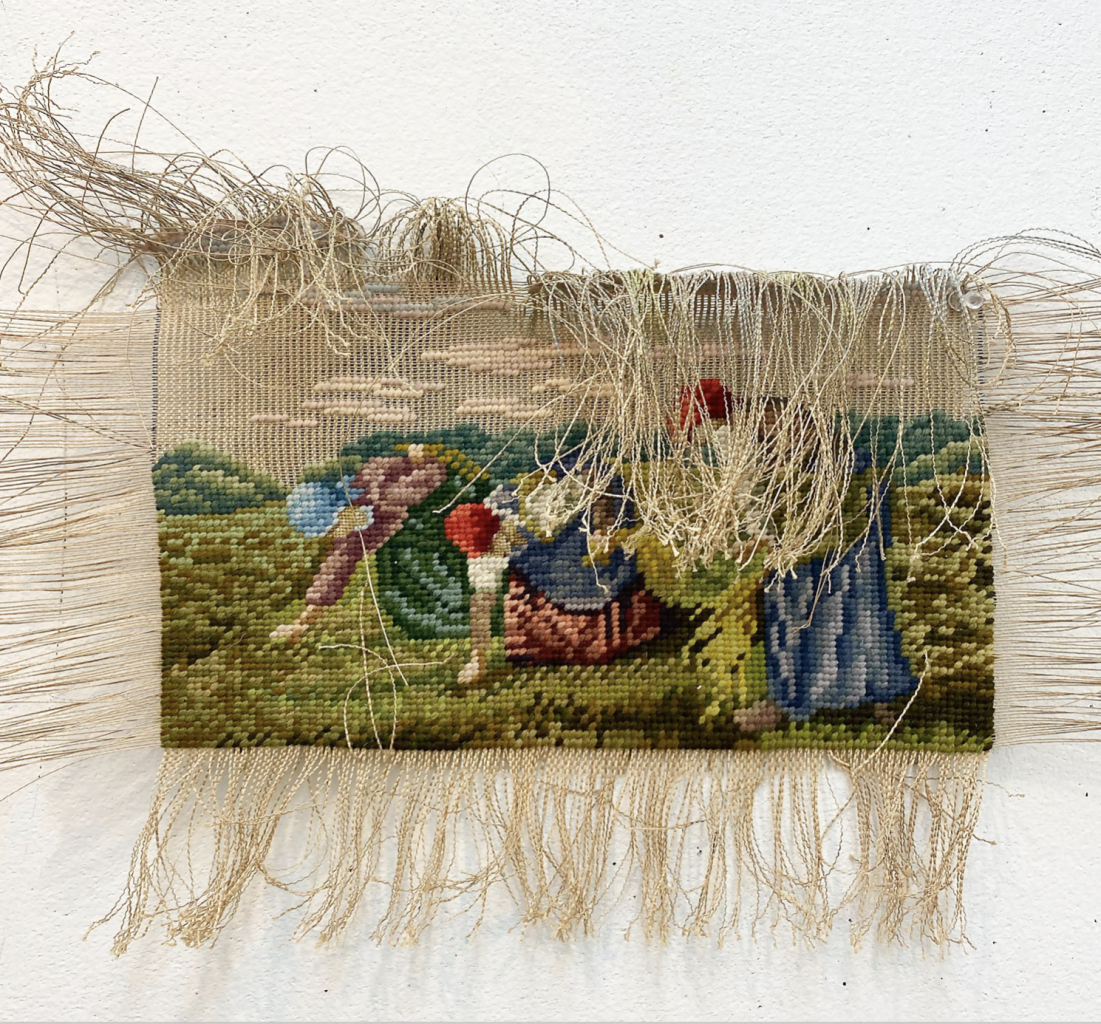
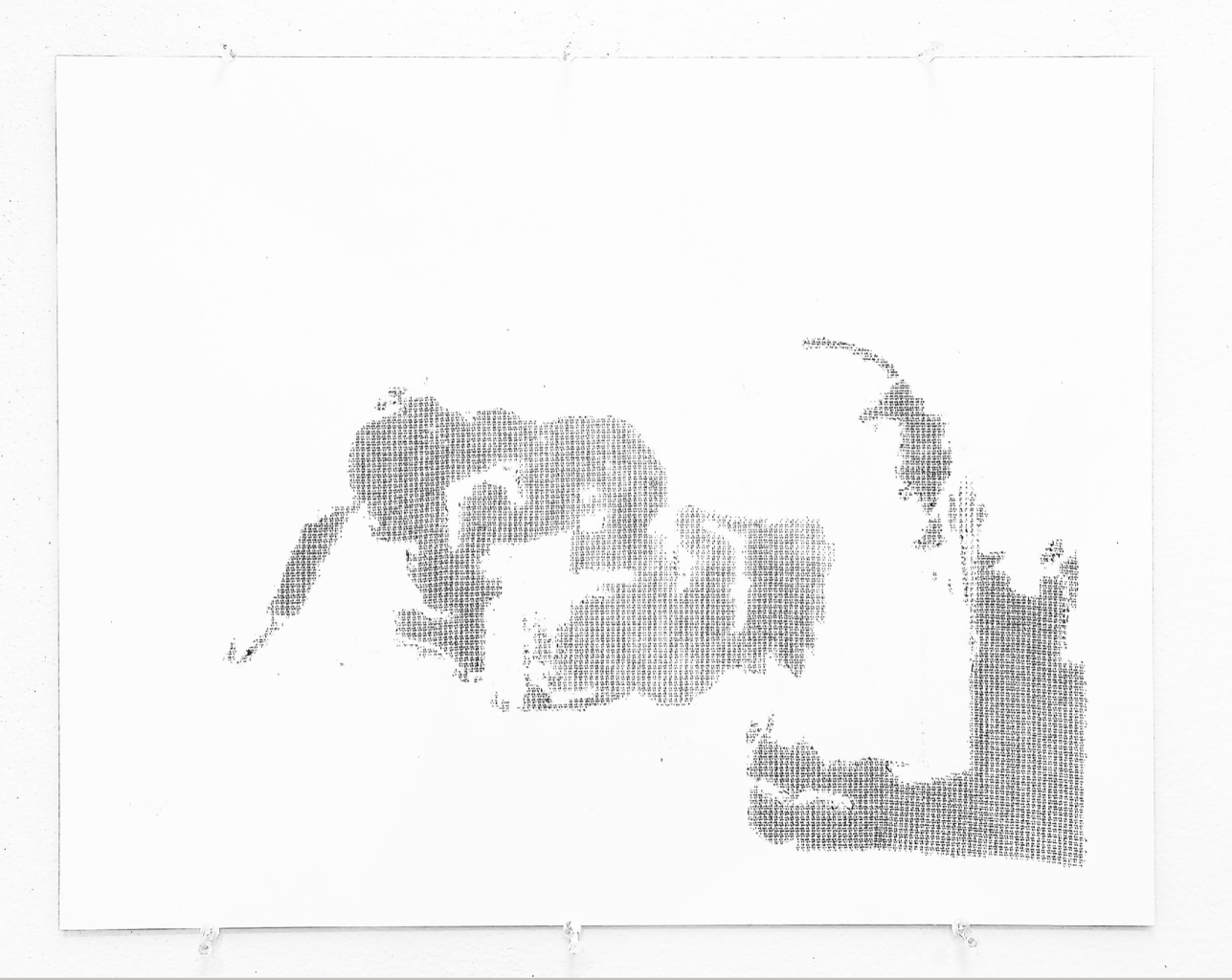
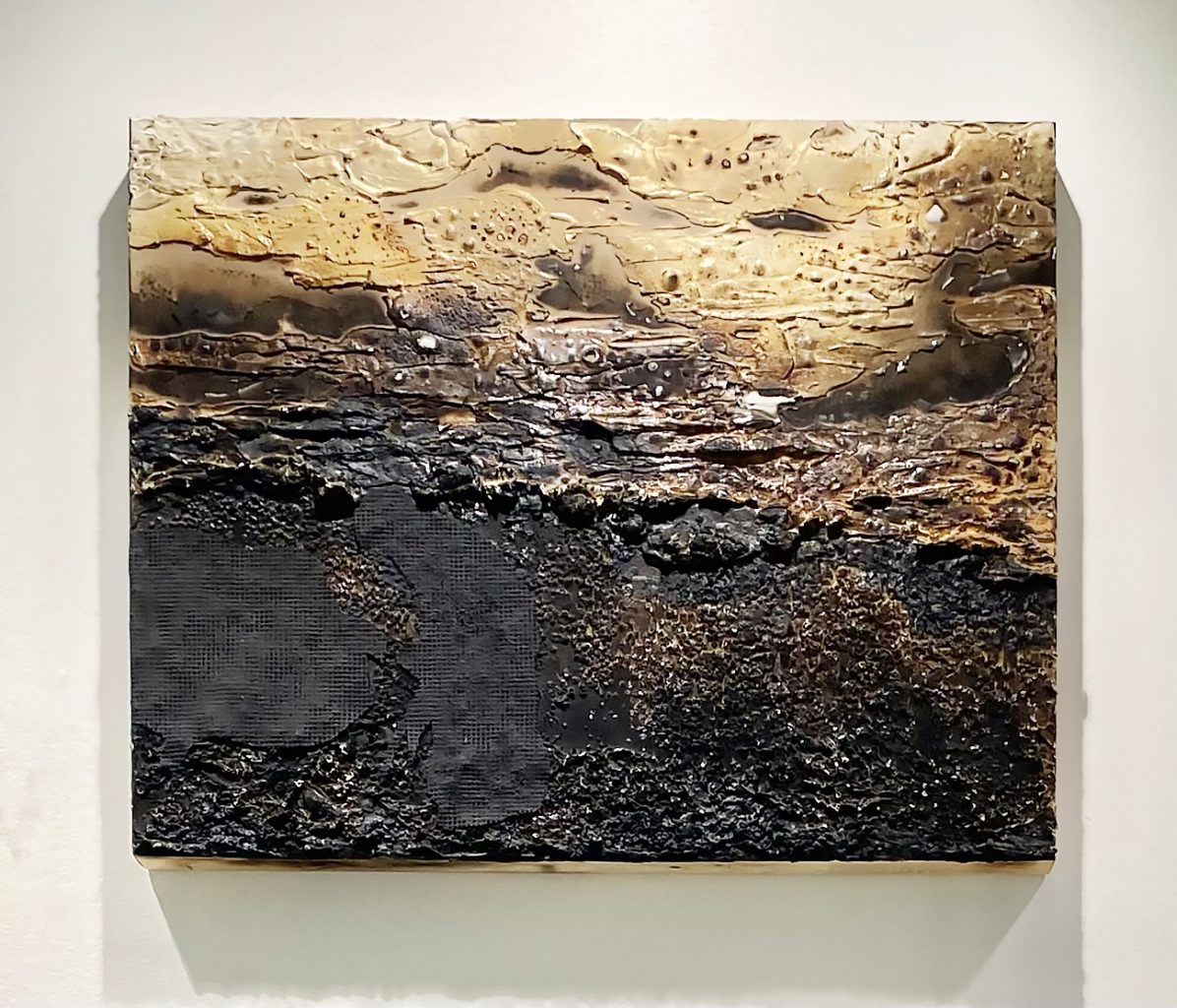
In her process, Cardelús works tactically and by hand with found needlepoints, submitting them to acts of pressure, disruption, and translation. As seen in the works presented here, she pulverizes needlepoint surfaces into dust, reshapes wool into painterly forms, unweaves or prints incomplete vintage needlepoints, and transfers brushed surfaces onto new supports. In one piece, stitches are treated as scattered grains—echoing the wheat berries in Millet’s painting—and removed from the surface to be gathered and held. In another (still in progress), plastic “stitches” are introduced into unfinished areas, further unsettling distinctions between material, image, and repair.
She also reimagines the landscape as burned and barren, with the gleaners reduced to black silhouettes nearly pushed out of the frame. These gestures complicate familiar oppositions – presence and absence, finished and unfinished, front and back, constraint and freedom – revealing how systems of representation persist even as their coherence falters.
Through this work, Cardelús collaborates not only with the form but with its makers—now largely unknown or deceased—transforming needlepoint from a decorative craft into a critical site for examining process, labor, and cultural inheritance. Her practice resists the notion of art as a fixed object, instead treating it as an evolving condition shaped by repetition, degradation, and material pressure. Across Driftpoints, images do not resolve so much as persist, tracing how systems continue to function, circulate, and leave residues long after their authority has worn thin.
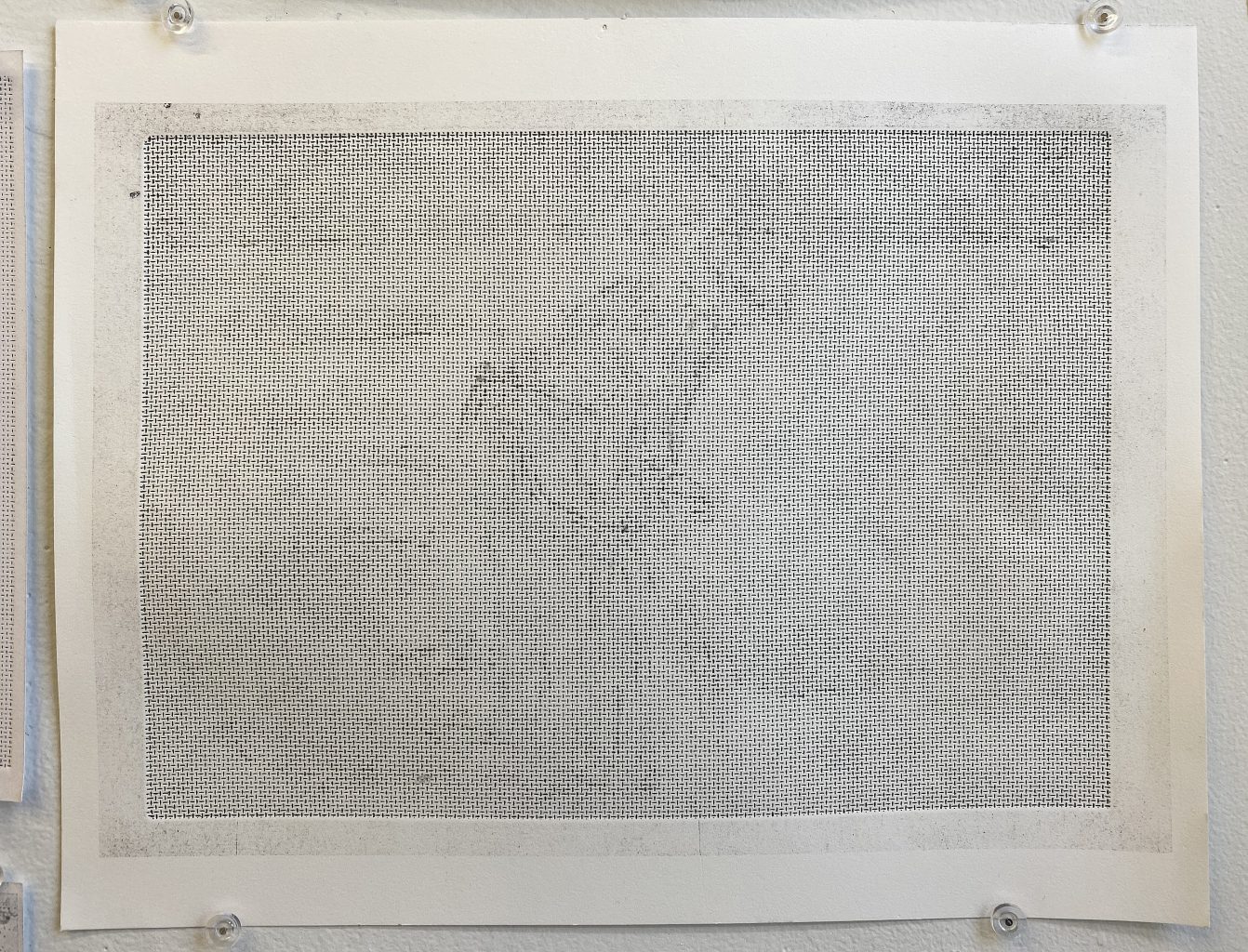
Experimental print using carbon transfer 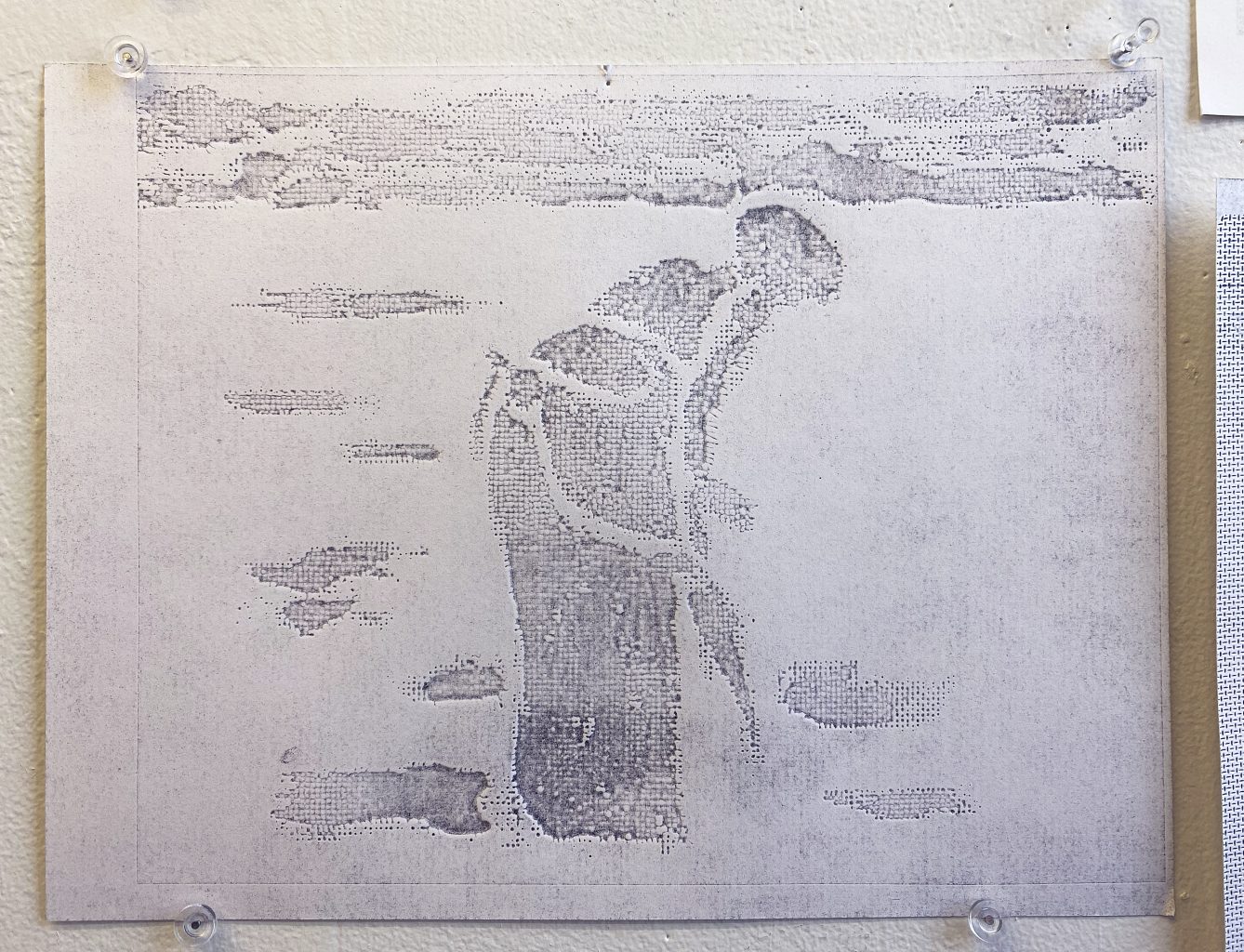
Experimental print using carbon transfer 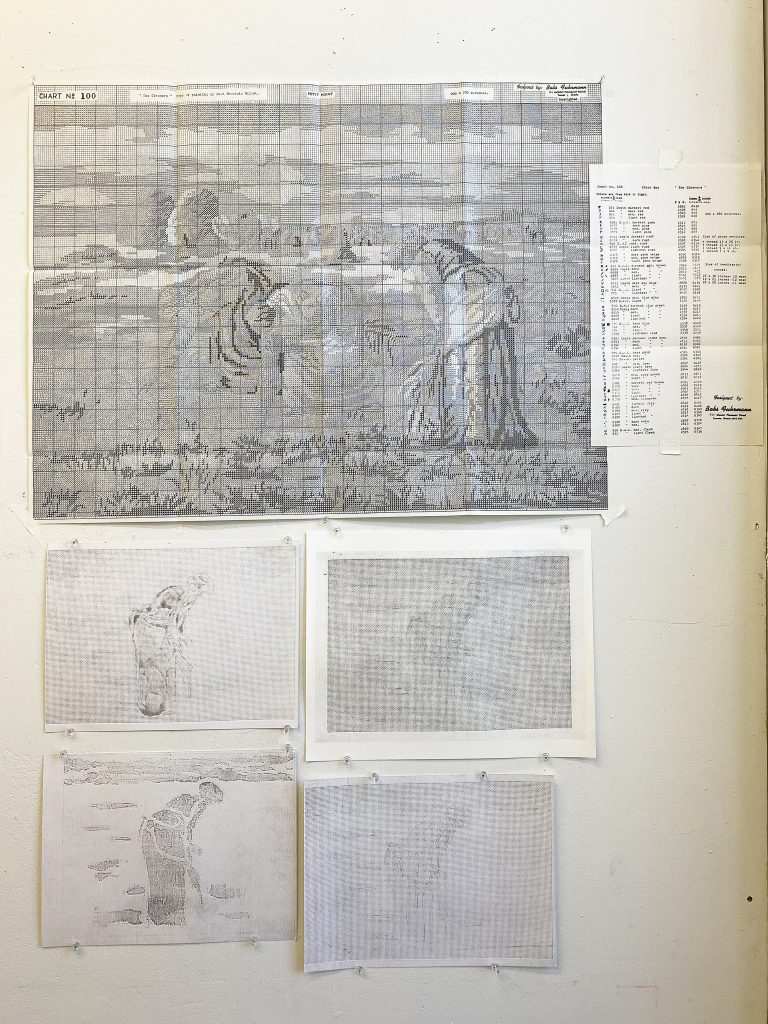
Found 50’s stitch-counting chart and legend; experimental carbon transfer prints 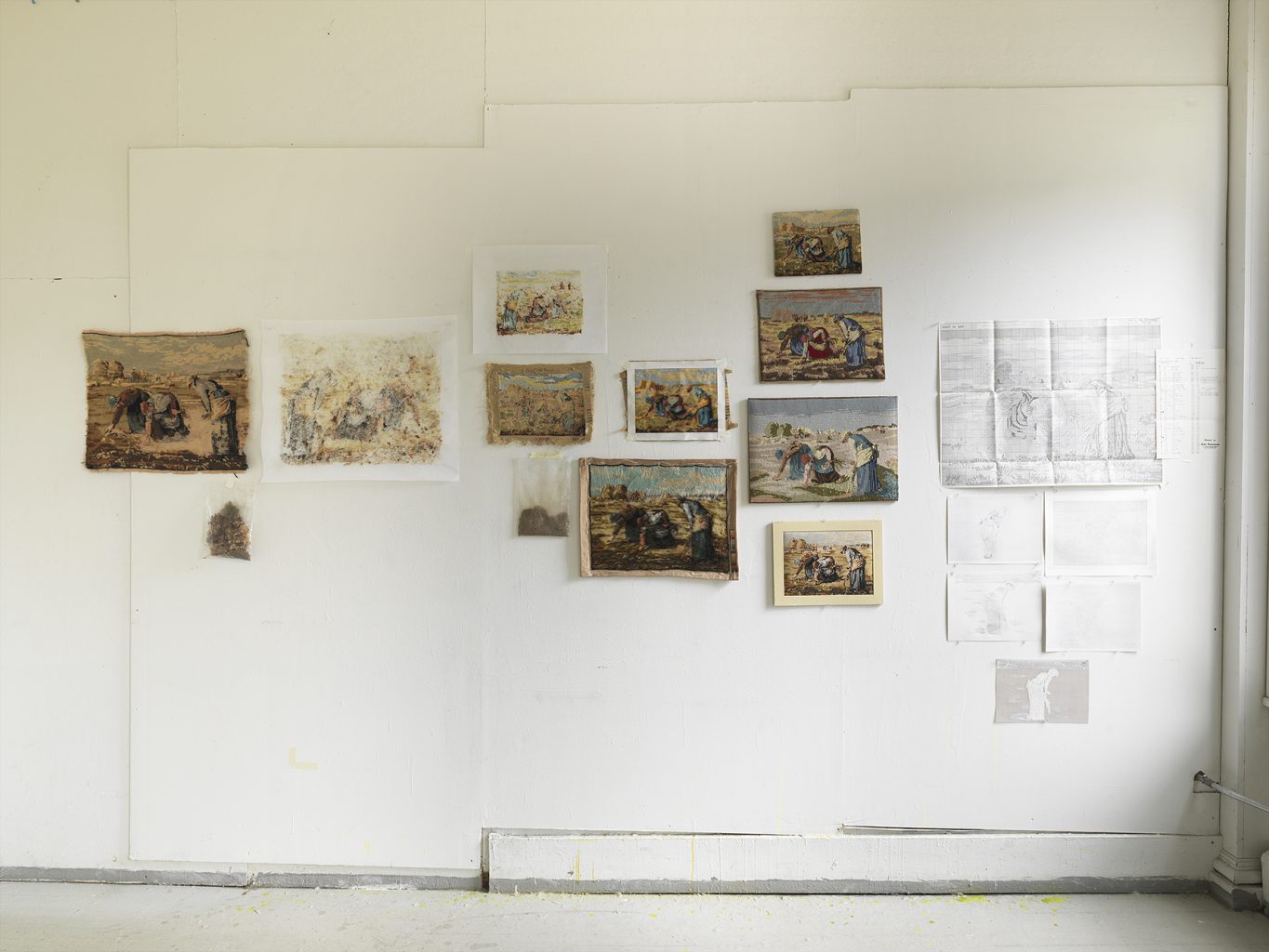
Studio wall showing cluster of experimental research pieces